
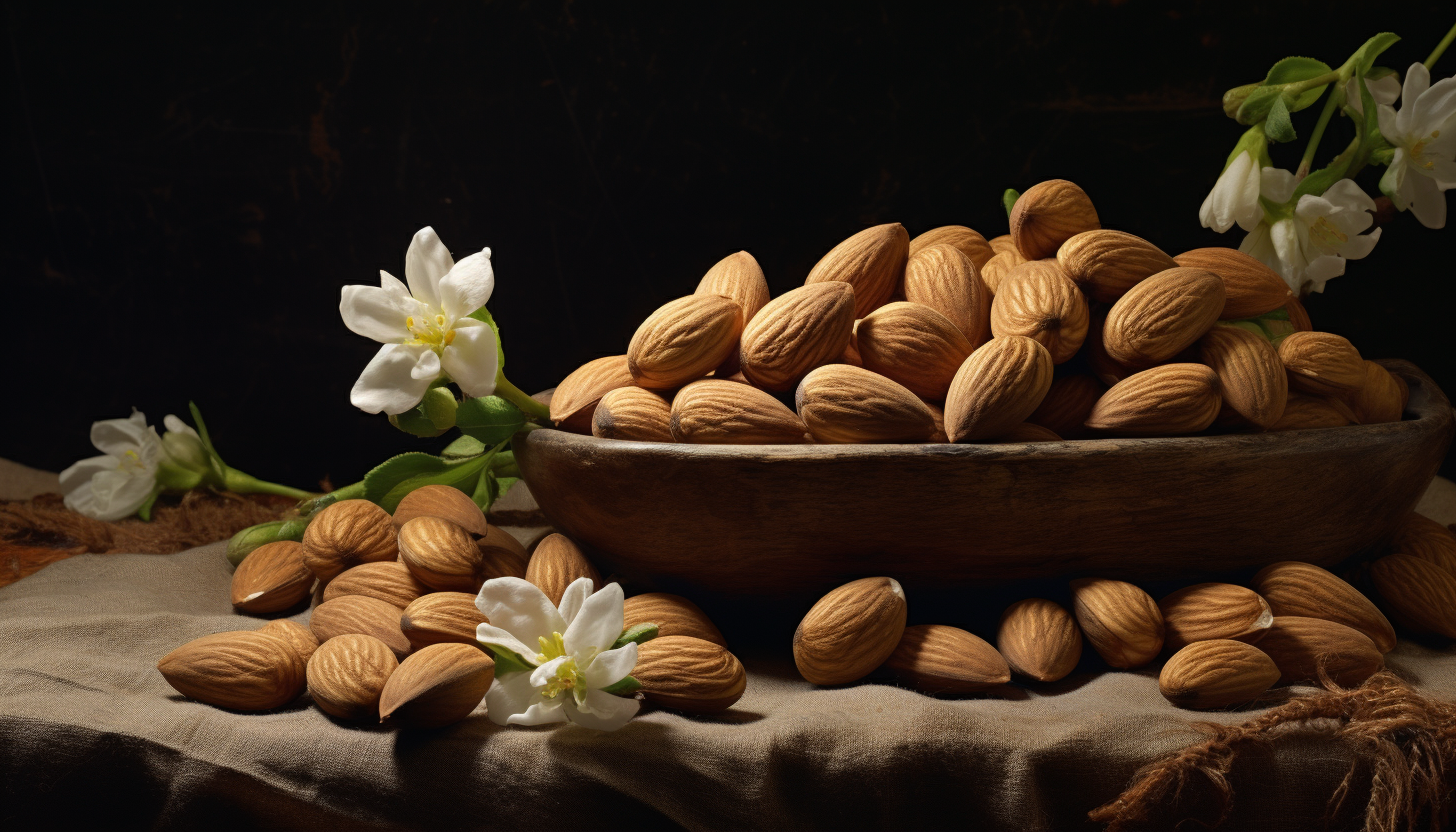
The almond, a small, oval-shaped seed that is nutrient-rich and delightfully crunchy, is a true treasure for our well-being. These little marvels are members of the Rosaceae family and have their origins in the Middle East. Today, they are extensively cultivated around the globe, particularly in California, Spain, and Italy. Here’s a closer look at these nutritional gems.
Nutritional Profile and Health Benefits
Almonds are extraordinarily nutritious. They are an excellent source of vitamins and minerals, including vitamin E, magnesium, and potassium. They are also rich in antioxidants, which can protect your cells from oxidative damage, thereby playing a role in chronic disease prevention.
Due to their high content of protein and fiber, almonds can help stabilize blood sugar levels, maintain heart health, and promote satiety, which can be beneficial for weight management. Moreover, despite their fat content, they predominantly contain monounsaturated fats, which are known for their heart-healthy benefits.
Culinary Uses of Almonds
Almonds are incredibly versatile in the kitchen. They can be consumed raw as a snack, added to salads for a crunchy touch, or used in both sweet and savory dishes. The almond also serves as the base for several derivative products, such as almond milk, almond flour, and almond butter, making them an excellent alternative for those who are lactose intolerant or following a vegan diet.
Buying and Storing Almonds
When purchasing almonds, you can choose between whole almonds, blanched almonds, slivered almonds, sliced almonds, or almond flour. Look for almonds in their most natural form, devoid of added salt or other additives.
To store almonds, keep them in a cool, dry place. If you purchase almonds in bulk, consider storing them in the refrigerator or freezer to extend their shelf life.
Incorporating Almonds into Your Diet
A handful of almonds can be a perfect mid-morning or afternoon snack. They are also a delightful addition to breakfasts—think yogurts, smoothies, and cereals. For lunch and dinner, crushed almonds can add a pleasing texture and nutty flavor to salads and main dishes.
Almonds are more than just a snack. They are a fantastic source of essential nutrients and can play a key role in a healthy diet. Their versatility makes them a superb ingredient to have in your pantry, ready to enrich your daily meals with their delightful crunch and impressive nutritional benefits. So, the next time you’re grocery shopping, don’t forget to toss some almonds into your basket!
Enjoying our articles? To ensure you don’t miss any of our latest publications, we invite you to subscribe to our newsletter. It’s quick, easy, and completely free! By subscribing, you’ll receive regular updates, exclusive tips, previews of our upcoming articles, and much more directly in your inbox. So, don’t wait, join our passionate reader community today. Click here to subscribe to our newsletter for free. Take the opportunity to stay informed and inspired!
Subscribe to our newsletter
- Expand Your Knowledge: Find more articles that might appeal to you!
